
Why Workouts Alone Aren’t Enough
How small choices throughout the day matter more than most people realize.

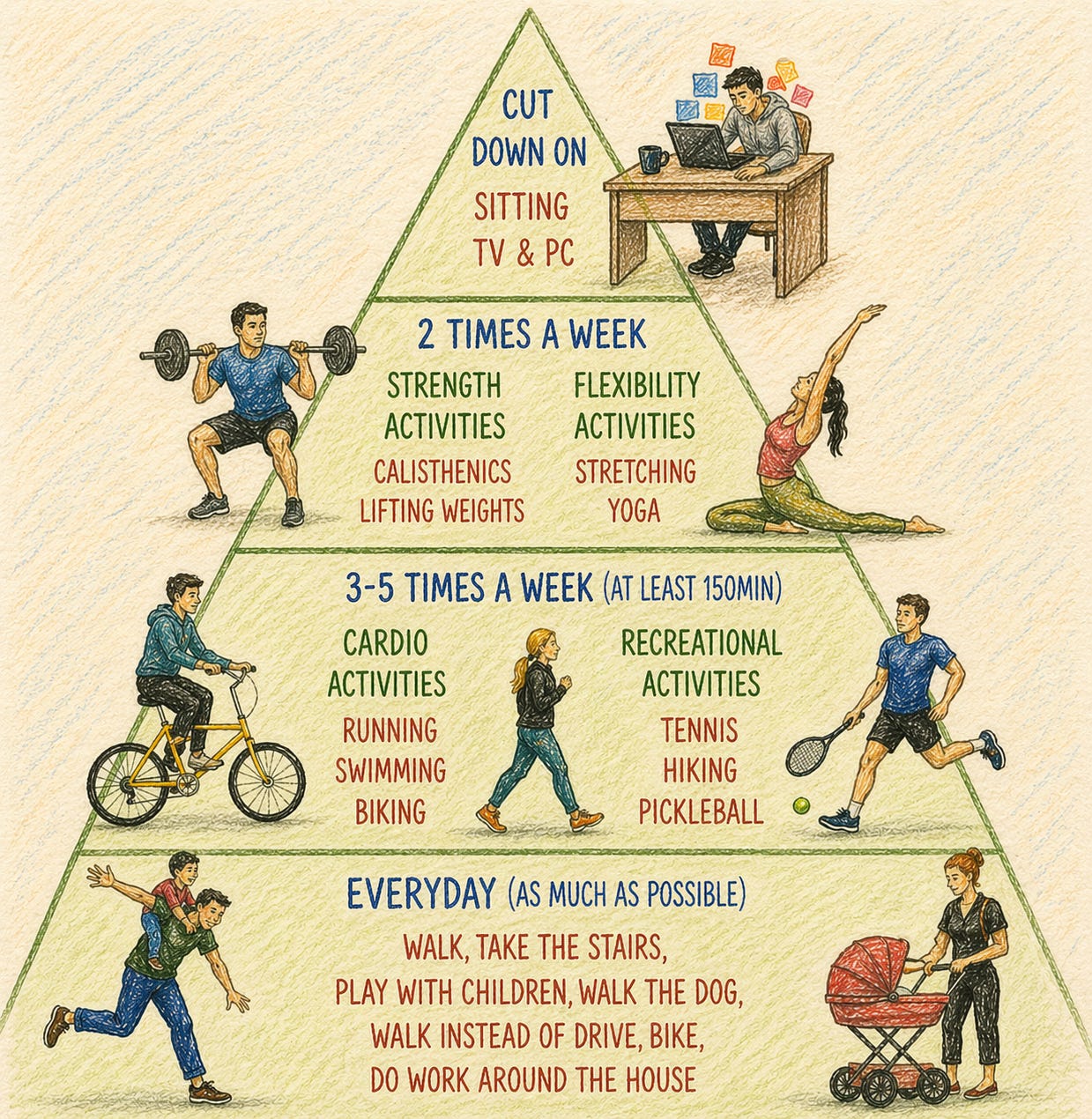
Most people think physical activity starts when the workout begins. But inactivity is usually built into all the hours before and after it.
We all recognize that there is a physical inactivity crisis, but what are we doing to solve it? Most of the conversation focuses on programs, workouts, or finding the “right” fitness plan. But I think the biggest factor is much simpler than that. It’s how we choose to spend our time.
I’m a coach, but ironically, that’s the least physically active part of my lifestyle. Most of my work is remote, which means I spend a lot of time sitting at a computer creating programs, communicating, replying to messages, and writing. If I didn’t intentionally add movement into my life, I could easily fall into the same sedentary patterns as anyone else. So I had to make a decision early on: I wasn’t going to rely on workouts alone to carry my physical activity. I was going to build it into my life.
Training in the gym is part of that. I've trained consistently since I was younger and have learned to enjoy it, so it’s fairly easy for me to train four times per week. But that’s not where most of my activity comes from. A lot of it comes from the decisions I’ve made outside of the gym.
I joined the Volunteer Fire Department, along with a Technical Rescue and Search and Rescue team. That wasn’t purely for physical activity, but it was part of the equation. They’re hands-on, physically demanding roles that require me to be capable. I also found groups that play recreational sports, I stay active with my nieces and nephews when I see them, and I gravitate toward active hobbies like mountain biking, snowboarding, kayaking, hiking, and camping. In general, when I have the option, I choose activity over something sedentary.
None of these decisions are extreme on their own, but together they add up. That’s really the point. Physical activity isn’t coming from one place. It’s built into how I live day to day.
The harder part, and the part most people struggle with, is the sedentary time that fills most of the day. For me, that’s sitting at a computer. That’s where many people struggle. Not because they don’t work out, but because the rest of their day is inactive. So I had to address that directly.
I don’t leave movement up to chance. I plan for it and I prioritize it daily. I use movement snacks and set reminders on my phone to get up and move. I don’t allow myself to sit for more than an hour without at least five minutes of movement. It’s simple, but it works. I’ve also adjusted my environment where I can. I built a standing desk and use a stability ball at times instead of a chair. None of this is complicated or hard, but it’s significant.
This isn’t about having the perfect routine, and it’s not about doing exactly what I do. It’s about understanding that physical health doesn’t come from one activity. It comes from a series of small decisions made throughout the day. Do you sit or stand? Do you walk or stay still? Do you choose something active or something passive? Those decisions matter more than most people realize.
I also want to be very clear about my point. This isn’t about doing what I do. Everyone’s situation is different. Work, kids, daily responsibilities; these are real constraints.
But physical activity doesn’t have to come from perfect schedules, popular hobbies, or the most enjoyable activities. The CDC and WHO both show that even small amounts, accumulated throughout the day, still make a meaningful impact. Walking pads under your desk. Taking a phone call or meeting while moving. Parking at the end of the lot. Taking the stairs instead of the elevator. Doing a 15–20 minute strength routine or Peloton ride at home instead of a 60-minute class that requires travel time.
These aren’t big changes, but they add up.
Instead of seeing your schedule as a limitation, start seeing it as something you can work within. Small opportunities are almost always available. You just have to look for them.
And the research supports this. Even low-intensity, low-stress movement like walking, standing, and light activity throughout the day has a measurable impact on overall health. It improves blood flow, supports metabolic health, reduces the negative effects of prolonged sitting, and contributes to total daily energy expenditure.
In contrast, long periods of inactivity, regardless of whether you work out or not, are associated with higher risks of cardiovascular disease, metabolic dysfunction, and overall mortality.
So it’s not just about getting workouts done in the gym. It’s about not allowing the rest of your day to be completely inactive.
If you’re trying to be more active, don’t only look at your workouts. Look at your whole life. Because the way you spend your time is the biggest driver of how active, or inactive, you actually are. And the good news is, you don’t need to overhaul everything. You just need to start making small decisions, one choice at a time.
this! cutting down on sedentary hours is what changed it all for me. i had the diet and workout plan nailed but i wasn’t progressing anywhere near as fast as my friends. a standing desk and lunchtime walks solved everything for me!!!
Love the graphic with this one. Nicely done my man!